Pages

Friday, 31 May 2019

'Milton Place' - Elisabeth de Waal

My beagle with the book
Regular readers of this blog will know I am a big fan of Persephone Books. I was first introduced to them in about 2005 and have been a committed admirer of their work ever since, because there is something reassuring and informative about well-written historical novels. They are comforting guides to the relatively recent past, they help to inform us about who we are and where we came from and, more often than not, they fill in gaps in our social history. 

While I've spent the past few years researching more than 500 old dead women (as I affectionately call them) who have been unfairly left out of most other history books for my The Women Who Built Bristol series, there are many times I've been reminded of plot details from different Persephone books: a reminder that these are not just stories, they are also based on lived realities. 

One of the most recent Persephone titles is Milton Place by Austrian writer Elisabeth de Waal, whose previous book The Exiles Return was reissued by Persephone in 2013 (my review is on that link). It seems astonishing that the two books were written by the same woman, as I found them so wildly contrasting and certainly enjoyed Milton Place much, much more. Both books are concerned with the idea of the alien: the newcomer, the outsider, the interloper, the misplaced person. Both books are about their protagonists dealing with the horrific fallout of war. But The Exiles Return was a tough read and not one I particularly enjoyed. 

So I was surprised to love Milton Place so much. It is a book that you look forward to picking up again in the evening, you root for the characters and at times I found myself skimming paragraphs ahead anxious about what I feared might happen and just unable to wait another minute or two to see if I was right. It is astonishing that Milton Place was never published in Elisabeth's lifetime and that it has only seen the light of publication now thanks to her son passing the manuscript to Persephone. It would make a wonderful film. 

We follow Austrian Anita who has endured unspeakable horrors at the hands of the Nazis during the war. Desperate for escape, in the early 1950s she follows up an old flame of her dead mother's and invites herself to stay at Milton Place, a fading country house in the UK, where she becomes good friends with Mr Barlow, who had adored her mother decades before. Throw in Mr Barlow's two unpleasant adult daughters, his naive grandson Tony and the problem of what to do with a decaying grand mansion, and you have all the makings of a brilliant country house novel. Indeed, I would go so far as to suggest that Milton Place is as close as you can get to reading a Dorothy Whipple (sigh, Dorothy Whipple) without actually reading a Dorothy Whipple itself. 

Put simply, please read Milton Place. It is a joy of a book and you will be captivated from the first page. After all, this is a novel that opens with one of the protagonists receiving an unexpected letter from a stranger... which is a very hopeful start and it only gets better from there.


PS: You can buy the book direct from Persephone by clicking here. Given there are fears that Persephone may not be able to continue post-Brexit (you can read more about this on their website), it is so important to support this wonderful women's publisher while we still have the opportunity. 


Thursday, 30 May 2019

'In The Willows'


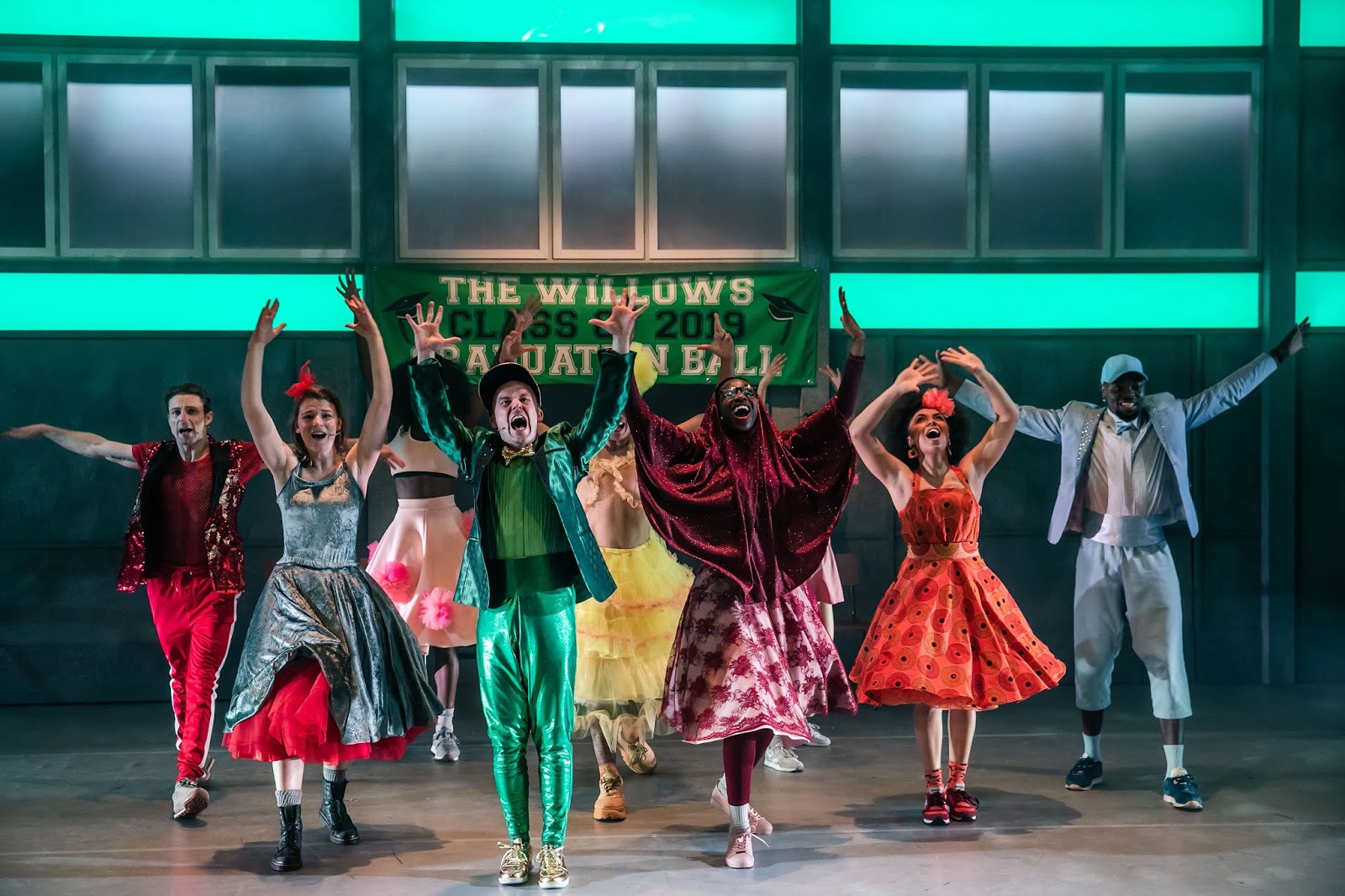
Kenneth Graham's much-loved children's story The Wind In The Willows gets the Hamilton treatment in this brand new, sparky production by Metta Theatre: In The Willows. Currently on show at Bristol Old Vic, this is a really fun, really engaging new musical aimed at the whole family. 

Loosely based on the original Kenneth Graham story, socially awkward Mole (Victoria Boyce) is new at The Willows comprehensive school and is taken under the wing/paw of streetwise Rattie (Zara MacIntosh) in kindly Badger's class (Clive Rowe). But there's a disruptive influence from attention-seeking, rule-bending Toad (Harry Jardine) - who now rides a motorbike rather than a motorcar, poop poop - and a sinister presence from the break-dancing weasel gang, led by Chief Weasel (Bradley Charles). There are references to the book via the River Bank club, the rough WildWood Estate and the Weasels overtaking Toad Hall, but the most charming nod to the original book (where Toad is rescued from prison in the guise of a washerwoman) is when Toad is rescued from a juvenile detention centre via a washing machine repairer!

In The Willows is a lot of fun and puts across its messages in a very approachable manner. We are reminded of right vs wrong and of loyalty to our friends, but it is not rammed down our throats. We are told to look out for our friends and be welcoming to all, but it is not overdone. And the inclusion of a sign language interpreter, as well as the frequent inclusion of signing done by the cast as part of their natural speech, is a great way of showing how easy it is to make theatre naturally inclusive. 

PS: An extra special shout out to the delightfully camp Duck (Seann Miley Moore from The X Factor), who is an absolute pleasure to watch. 


In The Willows is performed at Bristol Old Vic until Saturday 1 June. Click here for more information and to book tickets. 


Wednesday, 17 April 2019

Equus


There were times while watching Equus at the Bristol Old Vic that I felt the audience ought to quietly creep out of the auditorium and leave the actors to it, so heightened was the sexual chemistry on stage.

In this new production of the classic 1973 play by Peter Shaffer and directed here by Ned Bennett, the English Touring Theatre has reinvigorated this fictional account of the true story of a boy who blinded six horses. A psychological thriller where we know who committed the crime but not why he did it, Equus rips open our psyches and exposes human conditions from loneliness, desire, repression and mental illness.

Largely set in a psychiatric hospital, we meet psychiatrist Martin Dysart (in a mind-blowing performance by Zubin Varla) who is persuaded by a magistrate (Ruth Lass) to add to his overloaded case list with a troubled 17-year-old boy who has just been spared a prison sentence despite intentionally blinding six horses in one night. That boy is Alan Strang, who is portrayed in an astonishing performance from relative newcomer Ethan Kai.

Alan’s obsessive devotion to horses, especially Nugget, is of course the central crux of Equus. But this is really a metaphor for Shaffer to explore the human condition. The human relationships surrounding Alan are wreaked with unhappiness (his parents have a sterile marriage, Dysart has a loveless relationship with his unseen wife, Alan is unable to consummate his attraction to Jill). The handling of power is constantly being distorted - who actually has the control over anyone else? The repression of sexuality seeps out of the stage and is famously shown through the bondage-esque eroticism of riding a horse while naked and fetishising the bit in the horse’s mouth. A lot.


Despite being monologue heavy, the script is gripping and tantalising. We know what has happened but we want to know why it happened. And via Alan’s uptight father (Robert Finch), hyper religious mother Syreeta Kumar) and friend Jill (Norah Lopez Holden) we start to find out more about what led Alan to do what he did.

The simple set is continually reinvented with minimal fuss to transport us to a beach, a stable yard, a hospital bedroom and even a porno cinema. Choreographer Shelley Maxwell leads the cast through a beautifully balletic performance, that is perhaps best illustrated by the simple scene of Alan having a nightmare in his hospital bed - accompanied by strobe lights, a spinning bed and two nurses folding Alan into extraordinary shapes. It’s beautiful to watch, which feels awful given the pain it is intended to portray.

Ultimately, Equus leaves us questioning how one human can possibly understand another and what exactly it might mean to be mentally unbalanced.


Equus is performed at Bristol Old Vic until 20 April 2019, click here for more information and to book tickets. After this, it continues its tour around the UK. Click here for more information.


Monday, 1 April 2019

The Smallest Things by Nick Duerden


In The Smallest Things, journalist Nick Duerden shares a beautifully curated series of vignettes into the lives and workings of his Italian grandparents and their attitudes to life. Although obviously a personal memoir into his own family, Nick's writing invites the reader to consider their own family relationships while they read and, more importantly, to remember the things that are worth celebrating. 

The Smallest Things is a celebration of the finer details. Such as the intricacies involved in persuading two elderly, set-in-their-ways people that a day trip in the car with their new granddaughter-in-law would be a nice thing to do. Or the careful handling of a long-held family secret and the reminder that paternity has less to do with who biologically fathered a child and more to do with who loved and raised that child. 

Each chapter is its own self-contained story. Carefully and sparsely written, no words wasted. And each chapter is bookended by a tip from Nick's Italian grandmother - the art of boiling spaghetti for hours on end, or airing a bed each day and the way it must be done if it is to be done correctly. This all creates a very inviting welcome package into the Duerden household and the secrets they keep. 

The Smallest Things is a lovely book of tiny dramas, and a good reminder to value the little things our families do... and to ask the questions we have before it is too late.